Wouldn't you know that we just finished talking about how we enjoy coffee and now we have a post on tea? As a youngster, I loved sweet tea, the sweeter the better. Lately, when I go to a restaurant, I've gotten into the habit of asking for half and half (Half sweet and half regular). Today we're making tea at home. We have lots of herbs growing: Lemon balm, mint, French sorrel, oregano, basil, fennel, rosemary. Most of those are growing in the garden or in our little raised bed herb garden back by the bees. We do have some lemon balm and mint on the back patio, though, and that's what we'll be making our tea from today.
I picked 50 lemon balm leaves...
And then picked 50 mint leaves to add to our herb harvest... The honeybees were really active over by the herbs. Their buzzing was loud, and they were all congregated on the side of the four bee boxes. I got what I needed and got out of there.
First, I washed up the leaves and then sort of rolled them up together and cut them up. I bruised the leaves themselves with the back of the knife, thinking that would release some of the oils from the leaves.
I got 8 cups of filtered water boiling on the stove.
Then I poured the hot water over the crushed lemon balm and mint. I bent my head down and smelled the steam coming off the fresh herbs. So lemony and minty!
I gave it a good stir and covered it with a plate to let it steep for about 10 minutes.
Then I poured it through a sieve and into a pitcher and set it on the window sill while we went to Wednesday night prayer meeting.
I would assume that fresh, hot, brewed lemon balm/mint tea would be great on a cold day, but the heat index outside today is 101 degrees Fahrenheit. Hot tea just isn't in the cards, so I let the tea cool off completely and put the pitcher in the ice box. I poured a glass of lemon balm/mint tea over ice and garnished with mint leaves:
VERY refreshing on a sweltering summer day! If I had one change to make, I would make it stronger. Next time, I'll cut the water down to four cups instead of eight while using the same amount of herbs.
When we're in sweltering heat, we look at each other and say, "How much longer do we have of this?" The answer is right there. September temperatures average a high of 88 degrees and low of 69 degrees. Right now it's 91/73. September is only 2 1/2 weeks away. That's something to hang your hat on - something to look forward to.
Meanwhile we look for ways to regulate the heat. Let me share one idea with you. A tall glass of lemongrass tea with shaved ice with a sprig of fresh mint for garnish. First, put the cold glass against your forehead and then take a sip. Not too fast, though. You'll get a brain freeze. Sounds good? Let's make some.
I started this clump of lemongrass from seed several years ago. It dies back in the winter, but always pops back up in the spring. It is big and unruly, with sharp leaves that'll cut you like pampas grass. We have it growing in our little herb garden with some rosemary, ginger, oregano, French sorrel and parsley. I'll reach over and cut some off.
If you could smell this, you would see why it's called Lemon Grass. It has a wonderful aroma of lemons. In addition to making tea, you can use it to cook with to make Vietnamese dishes. We've never tried it, but I'd like to.
I washed it off real good, because there's ants and all sorts of critters that I don't want in our tea. I cut it up into inch-long pieces, put in a pot and add water. I put the top on, bring it to a boil and then turn the heat to simmer and let it steep.
I poured through a colander and funnel. The stems and leaves will be composted.
We'll let the lemongrass tea cool in the windowsill for a while. It's got a nice color to it and a nice fragrance as well. In fact, the entire kitchen smells fresh like lemons.
Ready to beat the heat? Lemme pour a glass for you.
*Takes a big, long sip*
Ahhhh. That's real nice and refreshing. This will go a long way in helping us make it to the cooler temps in September. Stay cool, friends.
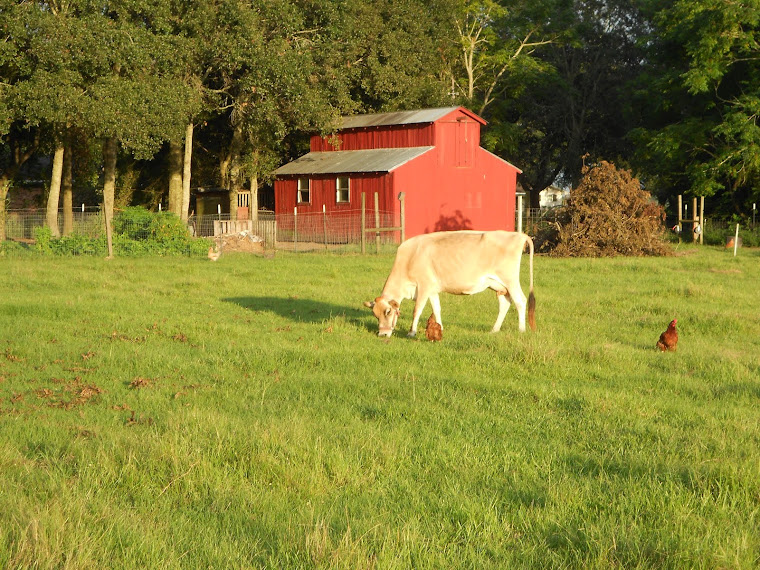
It's hotter than a two dollar pistol. This morning driving to work at 5:18 AM, the temperature was already 85 degrees. At the end of another summer day, we are all exhausted - animals and humans alike. We feed the chickens, gather the eggs, feed the goats, and get ready to milk the cows. We have a little more than two more weeks of milking and then we will "dry the cows off." There will be no more milk for several months until they start calving. We've been milking twice a day for a year and a half. It is past time to take a break!
Summertime is hard on us all. At the end of the day, the cows gather around the water trough. It is their sacred time. They dip their mouths in the cool water and draw deeply. You can watch as the gulps of water glides down their long esophagus. It is a peaceful time. The breeze gently blows, signaling a respite from the sun and heat for at least the evening.
Even Belle has found a cool spot underneath the pecan tree. Unfortunately she's made some sort of a nest in the foliage of Tricia's lillies, destroying them in the process. She doesn't know any better. The leaves must be cool, I'm not sure.
Cows love drinking water in the shade. Dogs like lying in a cool spot. Humans have come up with a multitude of ways to cool off and refresh. I'll show you one of the things we do. A couple of years ago I purchased some Lemongrass Seeds. There weren't many seeds in the package. They were small, and light. I was not impressed. I didn't think that they would grow. I planted them in our raised bed for herbs and lo and behold - they grew. They proliferated and prospered. I cut them back in the winter. The Lemongrass survived over the winter and here it is in its second year:
It smells so good! Even walking past it, you can shake the leaves and smell the refreshing fragrance of lemons. On Sunday I cut off a handful right at ground level. I washed it up in the kitchen and then began to cut the stems and leaves into little pieces.
I filled a pot with water and began to boil the water.
When it started to boil, I turned the heat down, put a cover on it and let it simmer for a while. After a while, I just let it steep.
I poured it through a colander to separate out the stem and leaves and put the lemongrass tea in a glass pickle jar we use for tea. Once completely cool, I placed it in the fridge.
After coming in from a hot day working outside, I like to put some crushed ice in a glass and fill it up with homemade lemongrass tea.
So refreshing to drink with a lemony taste and fragrance. It can be served hot or cold, but on a hot day like today - I like it COLD!
Each year when I'm ordering seeds, I always like to try something I've never planted. Sometimes it is a vegetable that we've always eaten, just in another color - purple carrots, for example. Sometimes it is an herb like lemon balm. One year I tried to grow lavender and failed miserably. This past year I wanted to try lemon grass. It seemed like an easy thing to grow, and I always like things that smell good. In fact, I find it hard to pass by basil plants in the store and NOT stop to squeeze a leaf and smell chocolate basil, pineapple basil and cinnamon basil.
Anyway, I got my seeds in, planted them and Boom! They all germinated. I planted them in the raised bed where I have basil planted and they took the whole place over. It looks like weeds in a roadside ditch.
The main difference being that weeds in a roadside ditch don't quite smell like this! If you cut some stalks of lemongrass off and inhale deeply, the soothing fragrance of lemons fills your nostrils.
Making tea is a very easy thing to do. Just wash up the lemongrass to remove and dust and bugs. Fill up a pot with water and begin heating the water. While the water warms, simply cut the lemon grass leaves and stalks into the pot of water and bring to a boil. It won't take long for the kitchen to fill with a nice lemon scent.
We allow the tea to steep for a while...
Then we pour through a strainer into mugs or tea cups.
Since we used an abundance of lemongrass, the tea we made had a strong lemon flavor and it was green. It was delicious. I am a coffee guy, but a hot cup of lemongrass tea in the morning would be nice, especially on weekends.
After it cooled, we put the leftover in the fridge. Lemongrass tea is very refreshing served as an iced tea. Our winter has been relatively mild so far. From what I read, lemongrass will survive the winter if it doesn't go lower than 20 degrees F. So far it looks like our lemongrass is gonna make it. If anyone would like some, I have some stalks that I'll gladly give you. The remaining stalks and leaves left over after making tea is nice to keep around and smell, but we eventually put it in the compost pile.
In addition to tea, you can make soups, stir fry, or simple syrup with lemongrass. I'm glad I tried it. I hope it grows in the summertime, so we can make some lemongrass iced tea.
A year or two ago I ordered some vegetable seeds from Baker Creek Heirloom Seeds. They frequently will send you a packet or two of free seeds with your order. I always think this is a neat deal as it gives you the opportunity to grow something that you might not have ever planted. Such is the case with the free package of Lemon Balm seeds that I got. This year I planted them right next to a terra cotta pot of oregano on the back porch. The lemon balm is thriving.
Lemon balm is aptly named. If you brush by the plant, it gives off a nice lemony fragrance. If you look at the leaves, it might remind you of mint, and that's no coincidence for lemon balm is in the mint family.
So other than smelling lemon balm, what are other uses of it? I read that you can add chopped lemon balm leaves at the very end of cooking either chicken or fish and it complements the dish well. I also read (and I'm gonna try this because it sounds so good!) that you can soften butter and mix in 2 Tablespoons of minced lemon balm leaves and a little honey and then spread it on warm, homemade bread.
Today, though, I decided that I would make my wife and daughter a cup of lemon balm tea. To do this, I cut a small bunch of lemon balm leaves and stems, washed them and put them in the bottom of a tea pot. Then I boiled water and poured it over the lemon balm leaves and let it steep for 15 minutes. At the end of the allotted time, I took the top off and inhaled deeply. It smells real nice.
I poured the freshly-steeped lemon balm tea into teacups and brought them to my wife.
She really enjoyed it and said it was nice and relaxing. I took a sip, too. It seems like this would also be refreshing by serving it cold as iced tea. We have a couple of months of summer left, so I'll try this for sure. Lemon Balm tea. Soothing and delicious.
So we left off yesterday in Our How to Make Kombucha Tea Post explaining how we made kombucha. After 10 days of fermenting on the top shelf in our laundry room where it stays a constant temperature of 78 degrees, we determined that we'd consider it done. You can leave it to ferment longer, but the taste profile changes and it gets less sweet and a little more 'tangy,' having a 'vinegar' taste.
We unscrewed the lid to reveal that another SCOBY had formed on top of the tea. That's when you know it's done. The 'mother' or older SCOBY was right underneath. Each time you go through fermentation, it will multiply and grow another SCOBY, allowing you peel one off and share it with a friend so that they can start brewing kombucha.
A New SCOBY
Simply lift the new SCOBY and the older one out of the fermented tea, and place it in a quart jar. You'll use it to start brewing your next batch.
Removing the SCOBY
We pour just enough tea out of the original batch into the jar with the SCOBY and the contents will serve as your 'starter culture for your next brewing. The recipe calls for a starter culture of 2 cups per gallon.
But before we begin brewing another batch, we need to drink this one! You can either drink the tea as is from the gallon jar that you removed the SCOBY from OR you can flavor the tea and let it undergo a second fermenting. Tricia likes it plain and enjoys drinking it as is. Me? I like some flavorings. Cultures for Health has a You Tube video below that you can watch to show you how to flavor your kombucha. Click on the arrow to watch:
In flavoring ours, we wanted a bold flavor and looked around to find something with a different flavor profile. We had some leftover whole cranberries in the freezer from Thanksgiving, so we crushed a handful of them in a bowl and then grated a couple of tablespoons fresh ginger. Cranberry-Ginger Kombucha! That sounds interesting, doesn't it?
Grating fresh ginger over crushed whole cranberries
We carefully put the cranberry/ginger mash in a juice bottle and using a funnel, poured the fermented kombucha into the bottle.
Flavoring the kombucha
You want to use a bottle that allows an airtight seal, because the second fermentation will produce carbon dioxide and give it an effervescent, fizziness. Put it out of direct sunlight on the counter and allow it to ferment for a couple more days so that the flavors intertwine. Now we wait... Again.
While we're waiting on the flavored kombucha to go through the second fermentation, we start our next batch brewing. Simply brew another gallon of tea and add 1 cup sugar per gallon and allow to cool, and pour the starter liquid you reserved from the first batch:
And go ahead and add the SCOBY:
Put a cloth over the top, fastened by a rubber band and set it back on the top of the cabinet for 10 days. You can see the SCOBY in the bottom.
After two days, the flavored kombucha is ready. I'm excited to try it. The button on the lid was popped out, letting us know that it was carbonated. I actually ordered a couple special bottles with flip-top lids (Grolsch-style bottles) for the next time. Anyway, we opened the top and poured the tea through a strainer to catch all the solids, and then back into the bottle.
I poured a glassful with a couple cubes of ice. You can see the carbonation bubbles on the side of the glass along with the beautiful, reddish color of the tea. In smelling it, you can smell the ginger.
Cranberry Ginger Kombucha!
Now for the taste test... DELICIOUS! We really enjoyed it and the gallon was gone quickly, especially since Russ came home from college and really liked it. I guess we'll have to brew bigger batches from here on out. The Cranberry Ginger Kombucha was a nice flavor. We're going to try other flavors. Cultures for Health lists these interesting flavors that you can make:
Other Flavoring Ideas and Combinations
Blueberries and cinnamon
Berries and fresh or candied ginger
Strawberries and basil
Cherries and almond extract
Pears and almond extract
Apple juice and cinnamon
Lemon or lime juice and fresh ginger
Pineapple juice, coconut water, and coconut extract
We like to try a lot of new things around here. I've been hearing for years about kombucha and have wanted to try brewing it for a while. We were standing on the banks of the Atchafalaya River outside of Melville at our friend's home, when she said, "Hey, I just brewed a batch of kombucha. Wanna try some?" She brought out three cups of kombucha tea and we enjoyed it immensely and I knew immediately that we just HAD to try our hand at making some ourselves. I can't tell you how good this stuff is.
Kombucha is a fizzy beverage made by fermenting tea using a SCOBY. SCOBY is an acronym that stands for Symbiotic Colony of Bacteria and Yeast. According to Wikipedia, people think that the word kombucha came from a Japanese beverage made from kelp or kombu. The actual kombucha tea is different and both the Japanese and Chinese translate it literally to "Red Tea Mushroom." Historians believe kombucha originated in China before moving to Russian and eventually Europe.
Regardless, it is a delicious effervescent beverage. There are many reasons to drink it for health. It provides detoxifying enzymes and acids that help your liver. It is made with a living colony of bacteria and yeast, so it is a probiotic that helps in digestion. There are many other healthy reasons to drink it. There's also the taste. It is delicious!
So we ordered a SCOBY from Azure Standard, a Co-Op that we belong to and it arrived in the box below. I like the fact that the label said Kombucha Brewing Made Easy. I'm always a little concerned when we try something new and I don't want to mess it up. The fact that it is easy is a big plus in my book.
Kombucha Starter Kit Arrives
The kit came with the SCOBY floating in the starter liquid, some oolong tea, organic evaporated cane juice sugar, and detailed instructions.
The Unpackaging
Get a gallon of filtered water boiling on the stove top.
Then put the oolong tea in the boiling water and allow to steep for 20 minutes.
Then pour the cup of sugar into the tea and allow to dissolve.
Allow the tea to fully cool. Once room temperature, pour the tea into a clean gallon jar. Up to this point, we just made regular tea that you might enjoy on the back porch on a nice day. Now, we're gonna throw a twist to it. Add the SCOBY and starter liquid in the bag into the gallon jar full of tea.
Pouring in the SCOBY or Mother
The SCOBY is also called the mother because it produces new colonies. It is not pretty. In fact, I think Tricia and Benjamin said it looks like a jellyfish floating in the tea. I'll admit, it is not very appetizing at this point and I'm wondering if this is going to be drinkable.
"Waiter, there's a jellyfish in my iced tea!"
Fortunately, we don't drink it now. You cover it with a paper towel or cloth and put a rubber band around it so that bugs, dust, critters don't get into it. It is alive and needs to "breathe."
Now you wait...
Now we put it aside, away from sunlight and in an area where the temperature is 75 degrees. We found a spot in our utility room on top of a cabinet that met that criteria. We placed it up there and allowed it to ferment for 10 days. The longer you leave it, the more "tangy" it gets.
We watched the youtube video below to help us learn how to make it. Again, I wanted to be very careful our first time to do this. The video is by Cultures for Health and they have all sorts of starters and supplies to help you get started making kombucha, kefir, cheese, yogurt, etc. If you're interested, click the arrow to watch a good instructional video:
This will be a two-part series. In the next installment, we'll show you what we did after the tea fermented for 10 days. Hint: We flavored it with an interesting blend of flavor enhancements.