Showing posts with label wings. Show all posts

Monday, September 15, 2025

Clipping Wings

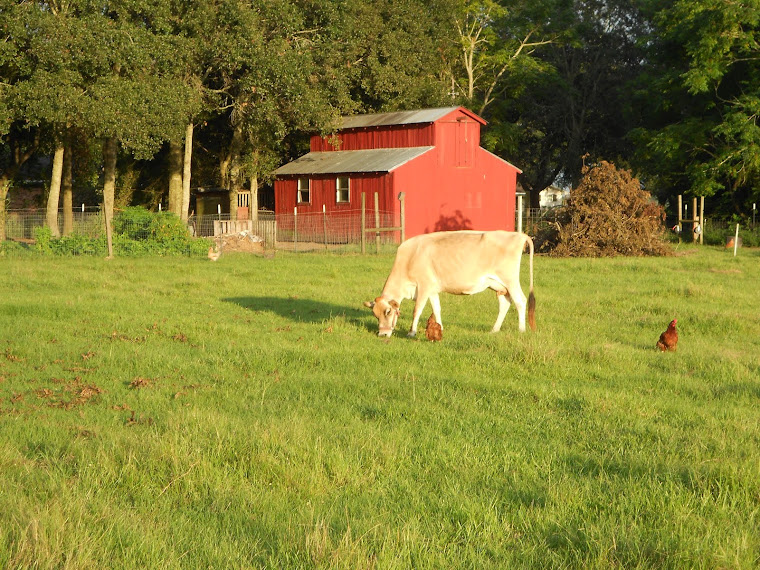
Although we have three acres for our chickens to roam around on, the old saying that "the grass is always greener on the other side" rings true for chickens as well as cows and goats.  Even though I have the wings clipped on my chickens, I have a couple of chickens that squeeze themselves out between the hog wire perimeter fence.  Pro-tip: When you clip their wings, you only need to clip one of them.  They can't fly with feathers on only one wing.

Our new neighbors put in a chicken yard.  More and more people are getting 'backyard chickens.'  There's nothing quite like picking fresh eggs every day.  The neighbor's birds are young and not quite laying eggs yet.  They quickly ate all the grass in the new chicken yard and would fly up on top of their hen house and then jump down over the fence.  About 15 birds would come into our yard and were scratching in the landscape and got into the garden.  They also devoured our persimmons that had fallen from the tree, before we had a chance to pick them up.  We had to do something quickly!

Tricia and I got our old net that we use when we go crabbing, and I also picked up my tin snips.  We had some chickens' wings to clip.  With both of us working together over two days, we cornered the chickens one by one and gave them a haircut.  You just take one wing and using the sharp tin snips, cut the wing feathers way back.  Then we gently tossed them back over the fence to their home.

The chickens squawked to express their displeasure, but at the end of the ordeal, no one was worse for wear.  Except, I broke a cardinal rule of neighborliness.  I didn't let my neighbor know what we had done.  I remedied that situation this afternoon.  I talked to him about it and he was thankful, saying that we saved him a lot of time, energy, and work.  So everything is smoothed out.  Everyone is happy... except for the chickens that have lost their freedom!  I'll have to do something to remedy the problem of two of our forty something hens that get out as I don't want them getting into their yard.  It's been more peaceful over the past few days without a flock of chickens in the yard.  There are two guinea fowl, though, that we couldn't catch, but I haven't given up.  We'll get 'em yet.

Wednesday, November 15, 2023

Checking in on the Honeybees

The fall flow from goldenrod flowers is just about done.  We didn't pull any honey at all this year.  We caught two swarms in the spring and decided to let them grow the colony for the first year.  We will attempt to get honey in 2024.  We open the boxes and inspect what's going on.  They are slowly filling the boxes.  This spring we are planning on splitting to double our two boxes of bees to four.

We love watching what they are doing.  Currently, they are bringing pollen into the hives.  You can see the bright yellow pollen on their legs.  They are very interesting insects!  

You've heard the old saying, "busy as a bee."  They stay busy indeed.  They work and work and work.  Back in the 70's there was a song that had the following lyrics: "Work your fingers to the bone, what do you get?  Boney fingers.  Boney fingers."  Bees are kind of like that.  They work themselves to death.  Their lifespan is roughly 35 days.  They say that a bee will have flown 500 miles in it's life.  Tricia was looking at a honeybee the other day.  I was trying to get a good photo of it, but I couldn't get it to focus.  I think you can see roughly what I'm talking about in the photo below.  Look closely at the bee's wings:

The edges of the wings are ragged.  There are notches in it.  This is normal in a bee nearing the end of its life cycle.  It's just worn out.  Do you ever feel like that?  Ha ha!  The impressive thing about the honeybee is that its life is almost over, yet the been in Tricia's hand is still out there working, gathering pollen for the colony.  She'll soon be dead, yet she is gathering sustenance for the hive to eat long after she's gone.  The amazing, industrious honeybee.  Since learning about bees, I've often said, "How can you be a beekeeper and not believe in God?"

Thursday, March 4, 2021

Birds of A Feather Flock Together (In the Pasture Now)

Since late August (right before Hurricane Laura), the pullets have lived in the chicken tractor in the back yard.  Correction: The day before the hurricane blew in, we moved the chicks and chicken tractor into the garage.  Shortly thereafter, we moved them out into the backyard.  We would roll the tractor each day, or every two or three days, to fresh grass.  The pullets foraged and scratched for bugs, worms, and tender grass to eat.  In fact, they denuded portions of the back yard.  The barren wasteland below was thriving with clover and winter grass.  No more.  The voracious birds turned it into mud and dirt.


So we figured, now that they are laying eggs, it is time to move them out to the pasture.  We had best move them out, lest our back yard turn into the dust bowl days come summer.  It is no small task.  First, we had to remove Belle, our Great Pyrenees, out of the pasture.  We don't trust her yet.  She may eat them all.  Next, we brought the young hens out to the pasture in a blue tub, five at a time.  

Before setting them free, we clipped one of their wings.  You don't want them flying over the fence and into the mouth of neighborhood dogs, possums, raccoons, or other predators.  You really don't need to clip both wings - clipping one will do.  It will keep them off balance.  A funny story about clipping wings, about 10 years ago, I set out to clip the wings of some pullets.  Somehow, I was holding the (very dull) scissors oddly and the repetition of the process and the pressure of the scissors against my finger caused a weird phenomenon.  My middle finger went numb.  It stayed numb for days!  I was concerned that I had damaged my middle finger - not that I use it that much...  But after a week or so the feeling came back.  Needless to say, I was very careful this time.  Slow and steady is the game plan.

The hens didn't like that much.  They would cackle and shriek and flap their wings.  This would incite the rooster to come nearby in threatening fashion for messing with his harem.  I was poised with the scissors should he be tempted enough to try to spur me.  We'd have a fresh rooster gumbo, for sure.  In the end, we finished the task.  

The hens and the rooster were rewarded with freedom.  A wise man once made a wise quote about freedom.  The context wasn't about chickens, but I guess you could say that we were happy to give our birds freedom.

Those who deny freedom to others deserve it not for themselves; and under the rule of a just God, cannot long retain it.  - Abraham Lincoln

After months of being cooped up, in the literal sense of the word, the birds are free to roam on the pasture and be birds.  They were happy.  The bottom door of our chicken tractor that a great friend of mine built, is left open so that they can go inside and lay their eggs, leave and forage for food and then return at night to roost.  We are a little concerned about the hawks.  Tricia has been counting them every day and so far, all of them are still accounted for.


Pretty soon, the rich spring grass will grow and the hens will have lots to eat.  The yolks of their eggs will get a dark yellow color not present in store bought eggs due to their diet.  The taste of spring eggs are second to none.

Green grass will once again fill the pasture.  Hopefully, green grass will fill our back yard again now that these girls are off of it!

Monday, July 6, 2020

Cool Spot For The Cows

We are in July now.  There is no end in sight to the hot days.  Inside the barn we've improved things to attempt to make it comfortable for us while we milk the cows.  We've installed circular fans and position them so that they point directly at us while we milk.  In addition to moving the air to make it somewhat cool, it also helps combat flies and mosquitoes.

One additional improvement is the 'wings' that come off the northern and southern roof of the barn.  This was a no-brainer that we should have done years ago.  These wings give protection against the rain and much-needed shade for all the animals.  They all seek respite from the sun's rays in the shade.  One added benefit is we don't have to give Rosie a bath before milking her every day.  In prior years, Rosie would lay in the mud to cool off.  You can actually see her old mud hole in the photo below.  It is right above the third water trough in the center left of the photo.


She would lay in the mud and get up for milking/feeding time and we would have to spray her down with a hose every single day.  Well those days are gone as she just lays up in the shad under the wings of the barn.  We even put up another lean-to on the eastern side.  For some reason the chickens really like to retreat under this roof.  I think they hide out under here from the hawks that terrorize them.  The old goat barn adds more area under roof.  This old goat barn still stands from years ago when the kids were young and showed Boer meat goats.  Now, the chickens and goats and sometimes cows get in there when the weather is bad.  We never leave the main milking barn open for the animals.  They are not good house-keepers and it would be a wreck!


As I was walking back from the barn this afternoon, I caught a glimpse of Annie with her doeling, Matilda.  They jumped up on top of an old water oak tree we felled a couple of summers ago.  Goats love to climb on things and this wood pile is their favorite - especially for Matilda.  Belle, our Great Pyrenees puppy, likes to play with Matilda.  Trouble is, she plays too rough.  She chases her throughout the pasture, running at full speed. 

We are always uncertain if she is going to harm Matilda.  Is Belle going to eat Matilda?  We keep a watchful eye!  When this occurs all of the goats enjoy running and jumping atop the wood pile for safety.  At least for now, Belle has not attempted to jump up there.


You can probably see above that the chickens really like the shade underneath the log.  The earth is cool and no sun can shine.  We've had to check beneath the log as hens like to lay nests of eggs underneath the log.  Speaking of finding a cool place in the shade, I'm heading in now!

Monday, February 24, 2020

Staying in Your Lane

Last year an acquaintance of ours offered to give us a rooster.  The rooster was purchased from a feed store as a baby chick and was supposed to be a laying hen.  However, as the chick grew and matured, it was discovered that the hen was not a hen - it was a rooster!  Roosters don't lay eggs and this person lived in town and didn't want a crowing rooster to wake up the neighborhood.  We gladly accepted the rescue rooster onto our homestead. 

He has grown into a regal-looking gentleman.  Most times that a new bird is introduced into a flock and its already established pecking order, they are ostracized, picked on, and bullied.  Sometimes this mistreatment ends in death.  Not in this case.  The old boy had lots of confidence from day 1, proudly patrolling the barnyard, putting the other roosters on notice and catching the eye of his new harem of hens.


Right before the sun rises, the rooster's crows reverberate around the country-side, alerting slumbering neighbors of the dawn of a new day.  The rooster struts around, keeping his hens in line.  He is the cock of the walk.  One afternoon last week I saw him standing on top of the garden fence and felt trouble was brewing.  I don't want the old boy in the garden, scratching in the mulch and eating our produce.  We once had a chicken that would sneak into the garden and eat the bottoms out of our homegrown tomatoes.  We put a fast end to that.

Saturday afternoon, the fence-sitting progressed to trespassing.  I cornered the curious cock and took swift action.  The bird is big and put up a fight.  His wingspan was quite impressive.


'Twas that impressive wingspan that enabled the old fellow to fly up to the top of the garden gate and then hop down into the garden.  This rooster needs to learn to stay in his lane.  We drew a 'red line in the sand.'
Before
You may be thinking that we killed the rooster, but that's not at all what we did.  I got some scissors to clip his wings.  By clipping his wings, he would no longer be able to fly to the top of the garden gate.  Snip-Snip, here.  Snip-Snip, there, and the job was quickly done!

After
Without those feathers, he would not be able to get in trouble by trespassing into the garden.  His wings were literally clipped.


Like the rooster, we can all step out of our boundaries from time to time.  A little encouragement to help us stay in our lane is much appreciated.  The old fellow's wings will eventually grow back and we will have to clip wings again, but for now, he is grounded, and he is in a "fowl" mood because of it.

Wednesday, September 21, 2016

The Best Protection Ever

 He will cover you with His pinions,
And under His wings you may seek refuge;
His faithfulness is a shield and bulwark.  - Psalm 91:4


The other night I headed out to the barn to do my nightly chores.  Up until now the momma hen always sat in the corner of the stall with her two little chicks tucked up underneath her.  Tonight however, the momma hen had flown up to the top of the gate to the large stall.  Her wings were pitched at a strange angle.  But where were the little ones?  I hope that another snake hadn't eaten them.  

As I looked a little closer, I realized that one of the little chicks was right beneath her!  She was sitting on her baby to protect her.  She looked at me menacingly.  Is she giving me the evil eye, or what?  But where is the other chick?


I lifted her wing to find out.  Yep, sure enough, just as the verse above says, the chick is seeking protection under the sheltering wings.

Peek-a-boo!
The imagery in that verse is so strong and descriptive.  Just as the chicks seek refuge from danger (like snakes and rats in the barn), we seek the same from Our Creator.  He is indeed our Shield and Bulwark.

That is not the only verse that uses the imagery of protective wings.  In Luke 13:34 Jesus says:

"O Jerusalem, Jerusalem, which killest the prophets and stonest them that are sent unto thee, how often would I have gathered thy children together, as a hen doth gather her brood under her wings, and ye would not!"

It is kind of neat to think about the fact that Jesus, as a boy in Nazareth, may have walked into his father's wood shop and found a momma hen protecting her baby chicks and that example of concern, care, and protection made an indelible mark on Him.  On the other hand, He is God.  He is the Almighty.  He made it all.  He knows how momma hens protect their little ones.  

The imagery of a hen protecting their young was, I'm sure, a familiar sight to those He was teaching in Luke 13 and I'm sure it struck a chord with them.  The tragic part of verse 34 comes at the very end - "and ye would not!"  Like the momma hen, Jesus wanted to gather them and protect them, but they were stiff-necked and would not allow Him to.  It would be a mistake to attribute that folly to the Jews of Jesus' day and not realize that we are guilty of that today.

When we go outside the protection of the Sheltering Arms, we put ourselves in harm's way from him who comes to steal, kill, and destroy.  There is evil in the world today.  There is civil unrest and violence and men kill one another.  As I type this, riots are breaking out in Charlotte, North Carolina. Lord keep us under your protective wings and may we not stray from you.

Tuesday, August 30, 2016

The Chicks are Growing Up!

Jerusalem, Jerusalem, who kills the prophets and stones those who are sent to her! How often I wanted to gather your children together, the way a hen gathers her chicks under her wings, and you were unwilling. Matthew 23:37

A Chicken Combo
In THIS POST FROM EARLIER IN THE MONTH we talked about the excitement of some baby chicks - four to be exact, that a smart momma hen hatched out in the loft of our barn.  I figured that we'd give you a little update on them.  The hen actually hatched out four little chicks.  They all seem to be barred rock variety - the same breed as the mother.  Since we have roosters from various breeds and since hens will sit on other hens' eggs, we never know what variety we'll end up with.  

We moved them down from the hay loft and into the goat milking stall.  Although they are little fluff balls, a 10 foot drop down to the barnyard floor might not be good for them.  Momma hen pretty much stays in the center nesting box with a chick tucked under each wing.  When we come into the barn, the babies pop out from beneath the mother as you see in the photo above.  The mother hen is really protective of her babies.  She clucks loudly and ruffles her feathers when we get near.  We throw her and the babies some crushed up rice to eat each day.  It is neat to watch the momma hen scratch and peck at the rice on the ground and then see the chicks imitate her. 

They have lost most of their 'fuzz' and have little feathers on their wings.  They are active little creatures for sure.  The momma has not brought them out of the barn and instead keeps a close eye on them within the confines of the barn.  This is probably a smart move since we've had so much rain. I'm sure she'll venture out with them pretty soon.  

"I got your back, Momma!"
Although this wasn't planned, we needed a few replacement hens as I've buried a few hens in the garden this year.  It is normal to lose a few to old age, injury or predators.  Our chickens live out their lives in happiness, enjoying their golden years on green pastures and die doing what they were born to do - eat bugs, worms, and scratch through cow patties looking for a tasty morsel to devour.  Some get injured when they come underfoot of our 900 pound cows.  There's just too much of a weight differential there and if the chicken isn't attentive, she becomes a "chicken patty" pretty darn quick. We hope momma hen is teaching her chicks to stay well away from the relatively monstrous hooves of Daisy, Rosie, Clarabelle, and Luna. Just one misstep and all that would be left of the chicks is a grease spot.

Then there's predators.  Perhaps some of you picked up on the fact that momma hen hatched out four chicks and the photos only show two.  One morning we came out to the barn and two of the little boogers were missing.  We put out a barnyard amber alert, but no missing chicks were found. Sad! So what happened to them?  I know how they met their tragic end.  They punched their ticket in a particularly brutal and macabre fashion and I'll tell you about it tomorrow if the Good Lord's willing and the creek don't rise. 

Wednesday, May 20, 2015

Clipping Wings

Pullets are young hens that are less than a year old.  Every year we hatch out and/or order some pullets to replace those in our existing flock that perished during the year.  We do lose a few hens each year from predation and a few simply to old age every year and in order to keep the level of egg production steady, we keep rotating existing hens into the flock.

Our process isn't a perfect one and others might have a better way, but the method we have found that works best with us is as follows.  Once the chicks reach about four weeks old, we move them from the brooder into the chicken tractor out on the pasture.  We keep giving them chick starter and fresh water and push them to fresh grass each day.  The chicken tractor they are in has no bottom, so the birds are able to forage for grass, bugs, seeds, etc.  They poop, fertilizing the grass and each day as we push the tractor, we are effectively broadcasting fertilizer that will cause the grass to grow green and lush for the cows.

The chicken tractor has nesting boxes in it and once the birds get around 24 weeks old and we can see their bottoms getting 'fluffy,' we know that they will lay their first eggs.  Once we find eggs in the nesting boxes, we set them completely free to free range over their 3 acre pasture.

The pullet chicken tractor
Last week we found one egg.  The next day we found two and the next day six.  Yes, it is time to give these young ladies freedom!

Ready for Freedom
But as they say, freedom isn't free.  It is going to cost them something.  In this case, the feathers on one wing.  You see, although chickens can't really fly too much, they can fly over the four foot high perimeter fence and we can't have that.  There is the garden to think about.  They'd pick it clean. There's also danger outside of the fence like dogs or other varmints that would like nothing better than a chicken dinner.  

So in order to discourage flight, I clip their wings real short on one wing.  I use tin-snips to clip the wings.  They work good on metal and equally well on feathers. Also, originally I was clipping both wings, but someone (wise) told me that this was a waste of time and effort.  By clipping one wing, it makes the chicken off balance and they can't fly.  See, I would have never thought of that.  I would have continued clipping both wings, but this saves me a lot of time and effort.  I like learning things - even simple things that allow you to work smarter and not harder.

Getting her wings clipped
I simply clip back the wing feathers almost to the wing itself.  The birds will go absolutely crazy, causing a big ruckus with lots of noise and drama, but it doesn't hurt them at all.  I climb into the tractor with the clippers and as I get one clipped, Benjamin opens the door, counts the number of birds one by one, and I gently toss the hen out for her first taste of freedom.

A pile of feathers
Amazingly, the birds will end up eating all their feathers.  The feathers are high in protein and probably good for them, but it is sort of weird, though.  I held up one of the birds so you can see the clipped wing.  Now they will eventually grow back, but it takes a good while and we'll just do the whole process all over again.

Clipped wings
We leave the door to their chicken tractor open for two reasons.  First, they are creatures of habit and they'll return to the roost in the tractor each night.  This means they'll be safe from owls and other nocturnal predators.  Secondly, they'll return to lay eggs in the chicken tractor and this keeps us from having to hunt for their eggs around the pasture each day.

Ahhhh... Freedom.  Ain't it great?!

Wednesday, November 12, 2014

A Chick Check Up

How do you like this new time?  I am not fond of it.  When I get home it is dark and it is difficult to get anything done outside.  That relegates my activities to indoor projects.  Ugh...  Yesterday I went to the garage and was just "puttering around." Do you ever putter around?  It takes great skill and patience to putter around.  To the untrained eye, when you are puttering around, it looks like you are just wasting time, but  unorganized action and lack of a clear goal aside, puttering can be therapeutic and somewhat productive.  I'm an accomplished putterer and it has taken years to perfect my craft.

Yesterday afternoon I was in the garage, deeply engaged in putterishness.  The outside temperature was dropping and I wanted to make sure that our 24 Barred Rock pullet chicks would continue to be comfortable in the brooder.  The thick bed of hay and the heat lamp provides a perfect environment for little growing chicks.  I added a little more chick feed to the tray and watched them jump in the tray and instinctively scratch with their little feet at the feed.

These are perhaps the most healthy birds that we've ever received in the mail.  They have been so lively since day 1.  They seem to be eating as much as we give them and drinking plenty of water.  At this point, they haven't soiled the hay in the bottom of the brooder such that the garage stinks and that is a good thing.  I have some repair work to do on the chicken tractors in the pasture before I move them out of the garage and that will require daylight, or Saturday or Sunday, to get that done.

But before we move them outside they have to have gotten feathers.  I decided to pick up one of the little chicks and inspect her 'featherization.'  (I think I just coined a word.)  When I tried to pick one up they all scattered, frightened by me.  Finally I snatched one little girl up and held her in my hand. While she's still mostly got the fuzz or down or whatever you call it, she does have something resembling feathers growing on the tips of her wings.  Can you see them?

"A bird in the hand..."
Let's take a closer look.  There.  I stretched out her wing and a uniform row of perfectly formed wing feathers appears, letting me know that our chicks are quickly developing.  That's a good thing.  The shortened days, molting adult hens, and reduced amount of protein available on our pasture have caused the adult hens' egg production to drop to about 2 dozen a day when we were collecting about 6 dozen a day previously.  These 24 chicks will be laying eggs in about 22 weeks, if all goes according to plan, and will supplement the egg production of our existing flock.

Wing feathers coming in
The little chick was getting impatient with me holding her and I put her back with her 23 other friends so they could eat until they were full and then bask in the radiant glow of the heat lamp. Other chickens sit under a heat lamp on the stainless steel counter at Popeye's.  Not ours.  These fortunate chicks will soon be out on pasture and will live out the rest of their days on green grass, eating bugs and worms, scratching through cow patties, taking dust baths and doing other important chicken activities.

It's high time I put the chick back in the brooder.  I have more puttering around to get done.
Related Posts Plugin for WordPress, Blogger...