Monday, October 7, 2024

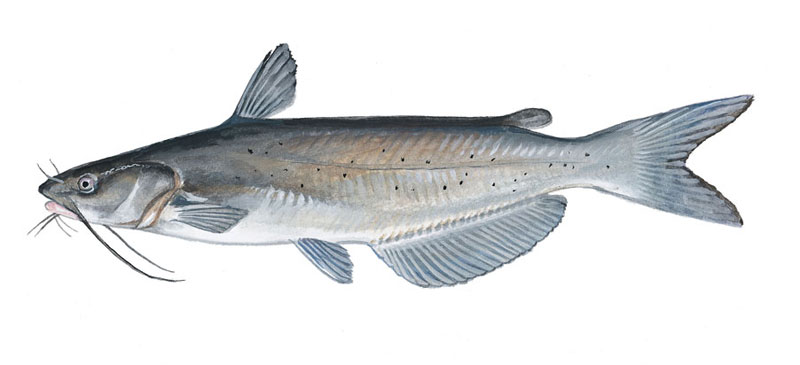
The Mystery Catfish


Image Credit

This week I traveled through Allen Parish and crossed over the Kinder Canal on both Highway 190 and Highway 165.  The Kinder Canal is an irrigation canal dug by the Kinder Canal Company decades and decades ago in order to provide water for farmers to irrigate their rice.  There was a large relift station on the Calcasieu River in which water from the river is pumped into the canal and flowed for miles and miles.  Farmers bordering the canal are able to use the water without investing in a deep water well.  They simply pay shares of their production to the Canal Company.  It is quite an engineering marvel, in my humble estimation.

As I passed over the canal, it brought to mind memories of riding my bicycle down to the canal to fish as a kid.  I smiled as I remembered one particular adventure.  I had a friend named David who lived right on the side of the Kinder Canal east of town.  He invited me over to his house to campout one weekend almost 50 years ago.  We pitched a tent on the side of the canal and dug worms and began setting out trot lines, baiting the hooks with worms, frogs, grasshoppers, and crickets.  We had lines set all down the banks of the canal amidst the cypress trees.  Every 30 minutes or so, we would go down the bank and check our lines for fish, rebaiting as needed, keeping our eyes peeled for snakes.

We started a campfire and sat around it in the interim, telling stories.  It was great fun, except we didn't bring any water.  The water from the canal was too muddy to drink.  What to do?  It was then that my friend, David, began to inform us that his Dad was a Green Beret and had taught him a trick if you were thirsty.  You would simply get a small stone, like what we call "pea gravel" and put it in your mouth.  It fools your mouth into making a bunch of saliva.  The theory is that this quenches your thirst.  Me and David and his little brother, Michael, that had joined us, ran down to the side of the road and found some small, smooth stones to put in our mouths.  Spit soon filled our mouths, but I can't testify that it made me any less thirsty.  I can't recommend it.  I give it one star out of five.

With stones in our mouths, we ran to check our trot lines.  We had caught a catfish on one of the lines.  There was a lot of whooping and hollering.  Success!  It was a blue cat.  We quickly skinned it and gutted it.  In addition to having no water to drink on this campout, we had no cooking utensils or seasoning.  That didn't discourage us.  We stuck a stick through the catfish and would spin the catfish on the stick over the fire, rotisserie style.  After a bit, the fish was done, or so we thought.  We were tired of spinning the fish, and we were hungry.  We passed the fish stick (ha ha) around the fire and we would each take a bite of the bland, unseasoned, and half-cooked fish, being careful not to eat bones.

At this point clouds of mosquitoes descended upon us like the plagues of Egypt.  David told of another trick to avoid mosquitoes.  You were supposed to coat your body with mud.  Based on the efficacy of his previous trick, I opted out of coating my body with mud.  Our campout at this point had hit rock bottom.  It was hot.  We were sweating.  Without water to drink, I was getting dehydrated, and I spit out the rock.  Green-beret trick or not, it wasn't working.  I also had a fishy taste in my mouth, mosquito bites on every square inch of my body.  I longed for the comforts of home, but it was too late in the night to back out.  I climbed in the tent, zipped it up and went to sleep.

The next morning, David and I were awakened by his brother.  He told us that HE had caught the biggest catfish he had ever seen.  It was a huge catfish!  He was making fun of us because we were older and yet he had caught the biggest fish.  He was trying to tell us that he had caught it on his fishing pole.  But something wasn't quite right.  As we looked at the big mudcat he was holding, we realized that he was pulling a fast one on us.  The fish still had a hook in its jaw along with thick black trot line tied to it that Michael had cut with his pocket knife off of OUR trot line.  It wasn't monofilament line like that on a rod and reel.  He had stolen our fish!  Mystery solved.

We were mad at him, but it was morning and we weren't hungry for catfish for breakfast.  Especially not bland, half cooked catfish, so we let him run on back to his house with the fish.  

Sunday, October 6, 2024

Feeding the Fishes

Thanksgiving is my favorite holiday.  I love the family time, the festivities, the crisp fall weather in the air, the focus on thankfulness and the food.  One of the things that we always shoot for is fresh green beans out of the garden as a side dish on the menu.  We grow snap beans in the spring.  In the fall, it's a little more tricky, but it's worth it.  I'm thinking about fresh snap beans wrapped in little bundles bound by bacon, topped with brown sugar and cooked in the oven.  Delicious!

But we have to work hard to get them there.  For one thing we planted two rows of Contender Snap Beans.  It's still 90 degrees a week into October.  That means the pests like army worms, caterpillars and other bugs are feasting on all the fresh foliage.  You can see some evidence of worm damage to the sweet potato leaves in the right corner of the photo below.  In looking at the forecast, on Tuesday, we'll have lows in the lower 60's and highs around 84 degrees.  That'll be the best the weather has been in a while.  Hopefully it will send the pests into hibernation or at least slow them down.

Yesterday, now that the snap beans are getting some size, I figured it was high time to give them some fertilizer.  They were started with some composted chicken manure, but now it's time to give them a little boost.  This time I'll hit them with some fish emulsion.   I use a powdered fish emulsion that calls for 1 Tablespoon per gallon of water that I put in my garden sprayer.  The leaves are covered until they are wet, giving them a good foliar feeding and then a spray the ground around the stem until the soil is wet.

I learned from experience to try to use it all up, leaving no leftovers.  If the fish emulsion is left in the sprayer, it heats up and 'cooks.'  The concoction turns green and smells absolutely awful - like raw sewerage.  So now I use it all up, emptying out the sprayer.  Although the fish emulsion stinks, the plants love it, and it is an organic, natural way to fertilize your plants.  I'll try to do this once every week.

Hopefully, this will keep the snap beans growing and pretty soon we'll see blooms and then a little later, pods.  And you know what that means?  We'll be swimming in snap beans come Thanksgiving.

Thursday, October 3, 2024

Holding a Grudge

The Good Book tells us not to let the sun go down on our anger.  It also has a lot to say about forgiveness and not holding grudges against people.  And we shouldn't!

But what about creatures?  Is it okay to harbor anger toward a murderous varmint?  Let me explain.  At Our Maker's Acres Family Farm, we have the Blue Bell Ice Cream philosophy with the commodities we raise: "We eat all we can and sell the rest."  People stop by and purchase eggs, milk, and honey from us.  We have a sign out by the road and our neighbors stop by and "shop."

Lately, we more of a demand for eggs than we have supply.  As the daylight hours shorten, hens lay less.  We have regular customers that routinely purchase a set amount.  We routinely eat a set amount.  As the supply of eggs from the hens are reduced, the math doesn't work.  So why don't we have more hens?!  Well, you're going to get me wound up tight asking that sort of question...

Minks.  Bloodthirsty, vicious, murderous varmints.  They ate most of our birds.  I'll show you a nightly chore we must do.  This is the hen house.  In total we lost 39 laying hens to minks.  One night there were 8, I think, killed in a bloody pile beneath the roosting bars.  This was the murder scene months ago.  Now each night, we must round up the few birds that habitually go into the hen house to roost.  

We pick each one up and bring them to a couple of rabbit hutches that we've repurposed as hen habitats for humanity.  The hardware cloth that the rabbit hutches are lined with are small enough to keep the minks out.  We put the hens in the rabbit hutches at nightfall and shut the latches.  Safe for the night.

These are battle-hardened hens (and two roosters).  They've watched in horror as their friends were killed one by one like the people on Soldier Island in Agatha Christie's "And Then There Were None."  If I believed in therapy, these girls would probably need several sessions on a therapist's couch.  But they keep going, day by day, looking death in the eye.  Well, truthfully, they're not that smart.  They depend on us to live another day.

I almost forgot.  Here are the 6 new birds we hatched out.  They roost each night in a dog kennel.  We shut the door to the kennel so they are safe.  In hindsight, with our egg shortage, we should have purchased more laying hens to replace the ones lost.  We did hatch out some of our own eggs by letting broody hens lay, but that's not a prescription for building your flock back up quickly as roughly half of them will be roosters.

Don't get me wrong, the roosters are great for gumbos.  We have some in the freezer waiting on "gumbo weather" right now.  But the fastest way to build the flock back up is to buy some chicks that have been 'sexed' so that you're buying only pullets.  That way in about 24 weeks, you have a good egg supply.

But C'est La Vie.  Such is life.  There are predators and unfortunately, our birds are prey.  We learn to cope and adapt and fight back.  Perhaps one day I'll forgive the minks for their deeds of darkness, but it won't be today.  The minks should have heeded the wisdom in Proverbs!:

If they say, Come with us, let us lay wait for blood, let us lurk privily for the innocent without cause: Let us swallow them up alive as the grave; and whole, as those that go down into the pit: We shall find all precious substance, we shall fill our houses with spoil: Cast in thy lot among us; let us all have one purse: My son, walk not thou in the way with them; refrain thy foot from their path: For their feet run to evil, and make haste to shed blood.  Proverbs 1:11-16

Wednesday, October 2, 2024

Manifold Witness

Summer and winter and springtime and harvest,

Sun, moon, and stars in their courses above

Join with all nature in manifold witness

To Thy great faithfulness, mercy, and love.

Great is Thy Faithfulness.  One of the great hymns that tells the story of the faithfulness of our Almighty God.  Where ours may waver, His stands strong.  Where we have good days and bad days, His days never change.  All the seasons, all of nature, as a matter of fact stands to testify that our God loves you.  He has mercy for you, and He will never let you down.

Let's call our first witness to the stand.  The bumblebee.  Mr. Bumblebee, do you swear to tell the the truth, the whole truth and nothing but the truth, so help you, God?  "I do."  First off, from an engineering standpoint, in the 1930's a French entomologist said that flight for the bumblebee should be impossible.  No one mentioned that to the bumblebee.  The bee continues to fly.  

Here we have a bumblebee pollenating the flower stalks on a Genovese Basil plant.  Bees absolutely love the flowers on the basil.  I generally pluck off the flowers, to keep the basil growing so we can make more and more pesto.  Thanks to the bees for pollenating and making our crops more productive.

The bumblebees' ability to defy the rules of physics and be able to make our crop yields increase is a positive testimony of God's goodness and love.


 The sugar snap peas I planted are popping up along the big trellis.  Soon they'll be climbing up the cattle panel.  They have tendrils that will reach out and like springs, attach themselves to the trellis, anchoring themselves while they grow upward.  When the strong winds blow, those tendrils serve as an anchor that gives, but doesn't break.  The sugar snap peas lean on the trellis for support.  The witness of the sugar snap pea provides testimony that we can lean on the Everlasting Arms where we'll be safe and secure from all alarms.  And while the peas cling, they climb and they bloom and they are fruitful - just as we should.

The Good Book tells us that, "unless a grain of wheat falls into the earth and dies, it remains alone; but if it dies, it bears much fruit."  A seed is dead.  I saved the cucumber seed below since 2016.  I had them stored in an ibuprofen bottle labeled with the variety name (Boston Pickling) and date in a drawer under our laundry room sink.  

I took that dead seed and planted it in the ground and watered it and look what happened?  The resulting cucumber plant bears witness to the fact that its seed was put into the ground and now grows and will soon bear much fruit, bearing manifold witness to the Creator.  

And the eggplant.  What a beautiful bloom the eggplant has.  As you walk around the garden and see the blooms on the eggplant, you know that a harvest of eggplant is on the way.  It doesn't happen overnight.  You must be patient.  While you wait on the harvest, you can enjoy the beauty of the eggplant flower.  Another eyewitness account of our Lord and His Providence.  He gives us strength for today and bright hope for tomorrow!


Great is Thy faithfulness!

Great is Thy faithfulness!

Morning by morning new mercies I see:

All I have needed Thy hand hath provided—

Great is Thy faithfulness, Lord, unto me!


Monday, September 30, 2024

Land Flowing With Milk and Honey

The lights are burning in the barn.  LuLu has been in milk for 14 months now.  We've finally weaned her bull calf, Nick, and he's in the back pasture that we call "the bull pen."  As the cows go into heat, we run them into the bull pen to be with Nick until after they've finished with standing heat.  Our goal is to get Rosie and LuLu bred and the big heifer, Elsie, bred for the first time.  

We're milking LuLu in the morning and at night.  She's not making a whole lot of milk, but we're trying to keep her cleaned out so that she doesn't get mastitis.  LuLu has been a pretty good milker.  Since Nick was weaned, she's making SO much cream.  Sometimes almost half of the bucket is heavy cream!

Here is our inventory in the fridge of LuLu milk.  It's all dated and we use the First in, First out method to make sure it doesn't go bad.  We get real creative with different things to do with milk when we have a good supply like this.

Cream rises to the top, so you can see what I mean about the rich Jersey milk from LuLu.  We skim the cream off the top and shake up the rest.  So delicious!

Lately, we've been making lots of butter and stockpiling it.  Butter freezes nicely, so we're building up stores of butter in the freezer.

We also have more fresh-churned butter in the fridge ready to slather on piping hot sourdough bread.

At some point here pretty soon, we'll dry off LuLu and that means we'll have a break from milking until the cows calve and freshen.  We're still milking Agnes, the goat.  Tricia plans on freezing some of her milk to make some goat milk soap.  We talked about milk tonight.  I've a story to tell you about honey, but I'll save that for another night.

Sunday, September 29, 2024

Hay Day Part II

In our post from last week, you might have watched as we moved 75 bales of Alicia Bermuda hay from our neighbor's barn into our garage.  We didn't want it to rain on the hay and we didn't have the manpower to hoist the bales up into the barn.  Although the words were not spoken aloud, there was some concern about the hay spontaneously combusting and burning down the house.  Fortunately, that didn't happen!

Since I'm still on a limitation for lifting heavy things as I recover from my surgery, my brother-in-law and sister offered to come help finish up the job and brought 3 of their 6 boys and Russ came over, too.  Dad and Mom came, and we used Dad's truck to load up the hay.  His truck is bigger than our red Toyota so we could fit more bales in it..  So Saturday morning after everyone was in from the teal pond, we met at 10 AM and got ready to work.  Loading the hay went very fast!  


We were able to get 17 bales max in the Toyota.  I wish we would have counted how many we were able to load Dad's Ford with.  He pulled away from the garage so we could throw more on top.  I say "we," but I didn't do much at all.  Tricia was cooking a lunch for the work crew and making homemade ice cream for the feed once the job was completed.

We had moved the cattle trailer earlier and rolled the round bales into one line in order to provide access to the gate to drive the truck laden with hay out to the barn.  It was a bluebird day, with low humidity and mild temperatures and the sun shone brightly through the trees.


The nosy cows (Rosie, Elsie, and LuLu) gathered round to inspect all the hoopla that was going on at the barn.  Shortly thereafter all 7 of the goats showed up as well.  It was too much!  I ran the goats into the barn.  They are just trouble - like a bunch of bad kids, just getting in the way and onto everyone's nerves.


Dad backed his truck up to the barn and we opened the doors to the loft and installed the pulley on the 4x4.  The hay bales are attached to the rope by bungee cord and then the rope is pulled through the pulley and each bale is hoisted up into the loft for stacking.

You can get an idea of the process from this shot from inside of the loft.  Once the bales were swung inside, the bales are slid on the floor to the back of the loft and stacked.  The 2x12's on the floor are worn smooth from pushing the bales on the floor year after year.


The bales are stacked 3 across and four high.  As more and more hay was brought up into the barn, the shorter the distance the hay had to be pushed as the loft filled up with hay that will sustain the livestock over the winter until the spring grass comes in.


Finally, the last bale was pulled up into the loft.  We figured we'd get a photo of the bale.  That's the one were were looking for to finish up the job!  The aroma of the fresh cured hay filled the barn.  It's a scent I associate with the anticipation of fall.

Top: Brett, Landry, Graham, Russ.  Bottom: Dad & Hayes

It really didn't take long at all with all the help.  We went inside, circled up, held hands and prayed.  Then we had nachos with ground meat and beans, cheese peppers, onions, lettuce, and sour cream with lots of visiting, telling stories and laughing, followed up by finishing off a cannister of homemade vanilla ice cream made with LuLu's heavy cream.  (It was her contribution for getting the hay for her to get her through the winter.)  We took one more photo with all the working hands:

L to R: Me, Landry, Brett, Jenny, Graham, Dad, Hayes & Russ.  Not pictured: Mom and Tricia who were photographers

Despite the work, we all had a wonderful time.  When you are laughing and cutting up and enjoying one another, time passes quickly.  I'll say this, I have been blessed by God to have an incredible family that supports you in your time of need, who prays for you without ceasing, who will drop everything and rush over to provide manual labor or encouragement when needed.  Thanking the Good Lord for all the blessings in our lives.  We are not worthy of all the blessings He's bestowed upon us.  Never, ever, ever, take family for granted.  Enjoy every precious moment you get to spend with them!


Thursday, September 26, 2024

Observances on a Thursday

I walked outside to a cool (for us) morning.  Temperatures were in the low 60's and it felt GREAT!  Belle, our Great Pyrenees, seconded that motion.  With her long hair, she's ready for cooler weather.  She was alert and frisky and guarding her charge of cows, goats and chickens.  She doesn't guard the honeybees.  She says, "the heck with that."  They stung her before and whenever we work bees, Belles goes into hiding.  I don't blame her.

The Black Turtle Beans are blooming and putting on pods.  I'll let the beans ripen on the plant and I'll pick the dried pods and shell them for cooking.  We really like black beans.   A favorite simple meal of ours is to cook the black beans and refry them into a paste and then spread the refried black beans on a homemade flour tortilla, add some white cheese, fold in half and eat.  The blooms of the black beans are lavender-colored and pretty, attracting pollinators to the garden.  The black beans are more or less a bush bean, but in this case, they reached out and grabbed the cucumber trellis and they are taking off climbing it.


Here's something cool I saw in the garden.  I chased it and the brightly colored insect was moving fast.  It is a red velvet ant, but don't be deceived.  It is not an ant.  It is actually a wasp.  This one is a female since it doesn't have wings.  The males have wings.  I almost made the mistake of picking it up and boy, am I glad I didn't.  It's nickname is "Cow Killer" because of its painful sting, ranking as one of the worst stings on the sting pain index.  Don't pick these up!

One final insect I saw in the garden was this black bee pollinating the louffa gourd flowers.  The brightly-colored yellow flowers are prevalent in the back part of the garden where the louffa vines proliferate.  This is not a honeybee and it is not a bumblebee.  I was researching to see what it was and if I'm looking at it correctly, it is a black bee - a carpenter bee.

Well, well...  We wage war with the carpenter bees out at the barn.  They like to drill holes in the 2x4s that form up the rafters of the roof.  On both sides of the barn, we keep badminton rackets hanging on a nail - not to play badminton, but we've found that the rackets are great for popping carpenter bees.  We swing and pop them mid flight.  They fall to the ground stunned, and we run and stomp on them.  It's great fun.  We're easily entertained, as you can see.

I'm glad this bee is pollinating, but I don't want him drilling holes in our barn.  If he does and we catch him with the racket, this will be the last flower he sees.

Related Posts Plugin for WordPress, Blogger...