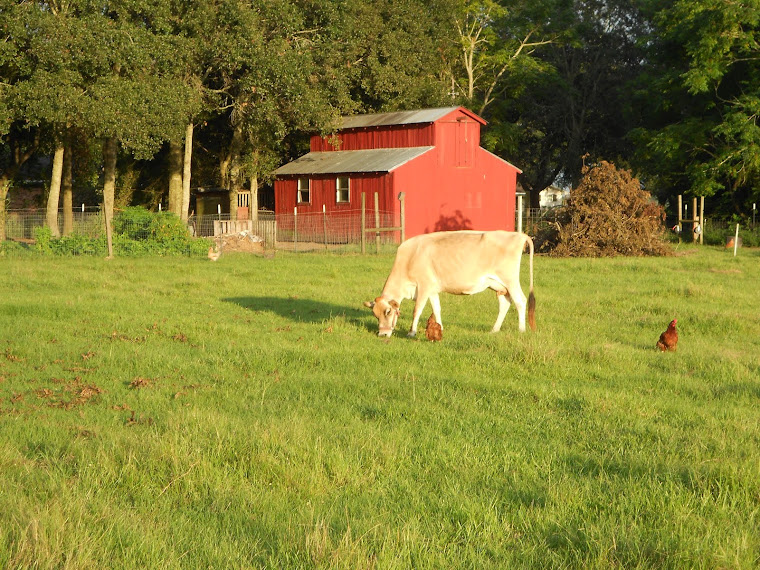
We've got lots we're working on in the barn to prepare things for LuLu's upcoming labor and delivery. She's one of our Jersey cows that will be calving in July. While we wait on her to calve, we figured we'd knock out some inside projects. We had moved a big bookcase/cabinet from the east wall of the den to the west wall. Tricia was tiring of the "orangish" look of all the wood in the den and wanted to change things up and paint it.
I offered two objections as soon as this project was proposed. First, it will make a heck of a mess, because we'd have to sand the entire thing. This would send dust from the polyurethane and wood all over everything in the den. Secondly, what if you don't like it? It's hard to move from wood to paint, but next to impossible to move back from paint to wood if you don't like it. My objections were overruled.
Time to get busy. We emptied the piece of furniture, taking pictures of how everything was positioned so we'd know how to reload it once painted. We used painter's tape to tape off the walls. We sanded and sanded and then used the shop-vac to clean. Then we primed the bookcase. Of course we laid down makeshift drop cloths to protect the floors.

Tricia selected a pretty blue color and we put two coats on, let it dry and then reloaded the bookcase. Here's the finished product. Tricia said it was a little too blue, but had heard that when you make changes, give it three weeks to grow on you before making any decisions to change it. Fortunately, three weeks passed and the blue "grew on her." Oh happy day.

The next project was in the kitchen. Our home was built 26 years ago. The balusters on the staircase were wooden white balusters. Even though they don't look bad, it was time for a change.

We purchased 38 cast iron balusters from a local hardware store. The plan was to alternate a baluster with a twist followed by one with a double twist. Some 3/4 inch holes had to be drilled with a paddle bit up above in the railing and down below on the stairs. The balusters were 44 inches long, so each one had to be measured and shimmied into place. Each measurement differed and numerous cuts had to be made. Before putting them in place, I applied some epoxy in the holes above and beneath. I had to protect the balusters with blue painters tape and taped the foot up until the epoxy had cured. Then I'd drop them and tighten in place with a set screw. And the job commenced...

In a little bit, we had the first portion done and the balusters on the landing removed. I borrowed an oscillating tool from Benjamin to cut out the old wooden balusters.

It didn't take as long as I thought before the job was done. I get overwhelmed by jobs like this because I'm not a carpenter and don't want to mess anything up. But you can learn how to do most anything on YouTube, and I watched several instructional videos before deciding that I could do it. Besides, if and when I mess it up, it can be fixed by a professional.


