Wednesday, February 10, 2016

Planting Onions 2016

Onions.  I love onions.  If I could only grow them.  I had a failed experiment back a couple of years ago when I planted some Red Creole onion seeds.  They sprouted, grew about two inches tall, and then promptly died.  Then I discovered Dixondale Farms.  They are located in Carrizzo Springs, Texas and have been growing onions since 1913.  I think they probably have it all figured out.

Their website that I linked above has instructional videos about how to select the correct variety of onion for your location.  Since I live in the Deep South, I learned that I need to grow Short-Day Onions and they mature in 110 days.  Now, considering my previous onion-growing experience, rather than just jumping in the deep end of the pool, I'm gonna stick my big toe in and swirl it around first.  What I mean by that is I'm going to order the Short Day Sampler.  The Short Day Sampler contains about 60 onion plants, including a mixture of the 1015 Texas Sweet Onion, Texas Early White Onion, and the Red Creole Onion.  The cost was reasonable at $11.45.

I placed my order back in December and they were delivered in January.  I placed them in the refrigerator and waited (and waited and waited) for dry weather to arrive for planting.  Finally!  But first I had to prepare the soil.  Things get a little overgrown over the winter.

The (Future) Onion Patch
I pulled up the garlic chives that multiplied like rabbits and replanted them in another location.  Then I removed the trellis that our cucumbers grew on last year.  I pulled the weeds out, feeding them to the cows, goat, and chicken and then used a shovel to turn over the soil.

Working up the soil
I used a string to mark off a 24" wide row, digging a trench and throwing the soil from the trench on top of the row.  That soil was last year's compost - rich and full of organic matter.  Russ came behind me and worked up the soil in the row with a hoe until it was crumbly.  Then I used a bowhead steel rake to level out the row.

I sent Russ on an expedition to the hen house.  His mission was to return with a 5 gallon bucket on composted chicken manure from beneath their roosts.  While he was gone, I dug a four inch deep trench right smack dab in the middle of the row.

Row pulled, soil worked, trench dug (making progress!)
When he returned, he sprinkled the chicken manure into the trench.  This will be the fertilizer that the onions will feed on a little later.

Homegrown fertilizer
Then we covered the trench with dirt and used the steel rake to smooth out the row. It made for a real nice seed bed.

Onion Planting Time!
I retrieved the Short Day Sampler from the fridge and laid them out on the packing sheet.  If you look closely you can see the yellow onions, the white and the red ones. These are young onion plants that haven't bulbed yet.  In other words, they have a big head start over my failed onion crop from two years ago that I started from seed.

Short Day Sampler
Russ and I used the handle of a garden tool to make a hole and then planted the onion plants one inch deep, 

Planting the onions
We planted the onions on either side of the central trench that has the chicken manure fertilizer in it, ensuring that we were 6 inches away from the fertilizer trench.  We also planted them 4-6 inches apart from each other.  As the onions grow and their roots extend, they'll tap into the fertilizer and grow big, fat onions.

Our work here is done...
Then, we simply watered them in.

Grow, little onions, grow!
We'll keep them watered and weeded.  Actually, I'm going to mulch around them with hay as they get established to crowd out any weed competition.  We planted 42 onion plants.  If we're successful, I'll order a whole bunch more next year.  

Tuesday, February 9, 2016

Feathered Fertilizer Spreaders

On October 15th of last year we showed you in this blog post: replacement hens, how we received baby chicks in the mail that day and put them in the brooder in the garage.  The babies were ordered to take the place of aged hens that just naturally die over the course of time.  Consequently, each passing year we add new birds to the flock to take the place of those whose egg-laying days have past.  Those hens that have assumed room temperature are buried in the garden and now produce vegetables for us - dead or alive, a laying hen's work is never done!

The new chicks, which included mostly Barred Rock hens, also included a few Barred Rock cockerels, a few Aracaunas, and four guinea fowl, grew quickly and they were moved to the chicken tractor in the pasture.  Today they are 117 days old, give or take a few days, and that puts them right at 17 weeks old.  Barred Rocks will begin to lay between 20-24 weeks old, so we are still about a month and a half away from seeing the first pullet eggs.

The photo below shows the birds in the tractor eating the chick grower crumbles that I've dropped them. The brownish-grey birds are Aracaunas, most of the black and white speckled ones are barred rock pullets, with a barred rock cockerel just to the right of center.  He's a bit bigger than the others. The all white and all grey birds are guineas of the White African, Pearl Grey, and Lavender varieties.

Birds are 'a growin'!
Each day I feed and water them and push the tractor forward.  The birds are better than a lawn mower.  In just a day, they clip the grass down.  They really enjoy eating grass.  If you butcher one, their crop will be full of tender grass.  There's another thing they do, though.  They poop.  They poop a lot.  Like a fertilizer spreader, they distribute chicken manure all across the pasture as I push the tractor to a new spot each day.

When the pullets begin to lay their first eggs, I'll clip their wings and release them to roam free on the 3 acre pasture.  Free at last!  The older birds you see below behind the tractor that I've just pushed are opportunistic.  When I push the tractor, like scavengers, they look for any tidbits that they can find to eat.  I see them eating the small feathers that the pullets have shed.  Feathers have protein, so that's what they are after, but I can't imagine feathers being very appetizing. 

The clean-up crew
I wanted to show you another photograph.  At first glance you will see a pasture that is mostly brown due to the frost, with a tinge of green grass stubbornly trying to hang on until spring.  You'll also probably notice my shadow as the morning sun casts shadows westward.  If you look in the very center of the photo, you will see a brown line.  That is the trail that is left behind as I push the chicken tractor.  It is marked by grass clipped down and rich chicken manure.  It looks like a dead landscape, but once a rain hits it, the nitrogen-laden chicken poop will cause the grass to grow very green in that trail.  It changes from a brown trail, to a dark green one.  The cows appreciate their feathered fertilizer spreaders!

The Trail
But in about a month and a half, the trail you see above will end as they will all be released to free range.  Have no fear, though.  We just placed our 2016 Meat Bird order.  At the end of this month we'll be receiving sixty (60) one day old meat birds in the mail.  We do this annually to raise our own chickens to eat over the year. They'll spend about 3 weeks in the brooder in the garage and then... Then they will occupy the same chicken tractor that the replacement hens will be evicted from and they will pick up the fertilizer spreader duties from the pullets.  And the cycle continues...

Monday, February 8, 2016

2016 Southwest District Livestock Show

This past weekend it was time for the Southwest District Livestock Show and Rodeo in Lake Charles, Louisiana.  It is held at the Burton Complex and is an opportunity for young people in 4-H and FFA to show their livestock.  We brought the animals to the barn Friday morning at 8 am.  There were Dairy cows, beef cattle, goats, sheep, pigs, chickens, and rabbits in the arenas.  We quickly found our group and set up under our banner - Jeff Davis Parish Dairy Exhibit.
Our Parish Dairy Exhibit
We brought Clarabelle, the seven month old Jersey heifer and Amy, who gave birth to Chuck, our little Jersey bull.  We brought Chuck, too.  There is not a competition to show Jersey bulls.  We brought him so that Amy wouldn't be mooing all day and night looking for her calf and for a secondary purpose that we'll tell you about in a minute.  Now, because you want your dairy cow's bag to be in "full bloom," you don't milk them out for about a day in advance of the show.  They will be so full of milk that milk will be dripping from their teats.  It is probably quite uncomfortable for the cow as she wants to be milked.  Chuck wants the milk, too.  For that purpose we put down fresh wood shavings and placed Clarabelle between Chuck and Amy so that Chuck wouldn't steal Amy's milk before the show.
From left to right: Chuck, Clarabelle, and Amy
Benjamin filled the hay socks with hay and the cows ate hay and got acclimated to their new surroundings.  Cows mooing and pigs squealing in the background isn't the most peaceful sound, but the cows are able to tune that all out and sit down and nap for a bit.  Then it is time to take the animals to the washing stalls and gave the cows a good bath, scrubbing them up so that they are squeaky clean, even cleaning the ear wax out of their ears.
Taking a rest after bath time

But it is not all hard work.  The exhibitors, enjoying an excused absence from school, enjoy themselves in any number of creative ways, like pushing a cart full of cow poop and hay.  There's plenty of good, clean fun that happens at a livestock show.  You have to keep your area clean, so each time your animal poops, you have to pick up the manure with a pitch fork and fill up the poop bin.  If you didn't, all your washing would be for naught as your animal would lay in their cow patty. Cows aren't real big on cleanliness.
Pushing the poop wagon
A few members of the Jefferson Davis Dairy Show Team - all smiles
Sittin' on the fence
Saturday morning the show started promptly at 8 am with Showmanship first.  For showmanship, the competition is really not about the animal - it is about the showman.  It is about how well the exhibitor shows the animal.  Points are awarded for your ability to set up your animal quickly, your focus and attention on the judge, your proficiency in answering questions that the judge asks you about your animal, and generally how well you handle your animal - even if they are acting up.

In the show ring
Sometimes even mommas get involved, holding animals between shows and keeping a bucket full of rags to 'touch up' the cows prior to their turn in the ring.

Clarabelle & Tricia
Once Showmanship is over, then it is time for the regular show.  The cows are broken up into breed classifications that are separated by the age of the animal.  In the photo below, Benjamin is showing Clarabelle in the 7 month old Jersey heifer division.  He has her set up nicely, with her legs properly placed and her head held high.

Clarabelle set up for the judge 
Under the shining lights of the Burton Coliseum, Benjamin and Clarabelle really shined, winning a bunch of nice rosette ribbons.

Benjamin & Clarabelle
Here is a shot of Benjamin and I with Clarabelle.  She is showing off her Reserve Champion Jersey Heifer Louisiana bred ribbon.


Once Benjamin was finished showing, we walked Amy & Clarabelle back to the barn where Chuck was waiting.  That little dude was hungry and finally, since the show was over, he could drink Amy's milk.  Chuck drank and drank and drank until Amy was drained.

Emptying Amy
Chuck had a belly full of milk and he quickly sat down and began napping.  We laughed at him as he dozed off, his head sinking and sinking and sinking into the wood shavings.  
Amy, Benjamin, and Chuck
Since they want people to walk through the livestock exhibits prior to the rodeo, even though the show was over by noon, they wouldn't release us until about 8:20 pm.  We had an entire day to kill. Benjamin rested on and along with his animals to pass the time.  We also talked to parents and kids walking through the barn, explaining and showing them how to milk a cow.  Many folks aren't familiar with farm animals and they had the opportunity to pet the cows and learn about them. Believe it or not, some kids didn't know that milk comes from a cow.

We also visited with other exhibitors.  Our Jeff Davis show team is a close-knit group and we ate brisket sandwiches, rice & gravy and a bunch of snacks while we talked and laughed and enjoyed each others' company.

Catching a quick nap
We got home at about 10pm Saturday night.  It was a long day.  We got the cows unloaded from the trailer and back in the pasture.  They were glad to be home.  So were we!  Benjamin had a nice haul of ribbons of which he's proud of.  They'll decorate the wall of his room.

Benjamin's Ribbons
This weekend we'll take Clarabelle to Gonzales, Louisiana, where the State Livestock Show is held. Benjamin is looking forward to going to the State Show to show his calf and have fun with his friends.

Thursday, February 4, 2016

Remembering an Old Cure

This past weekend it really warmed up.  It was the very end of January and the temperatures were in the 70's.  Crazy, I tell you!  I stepped outside the door to our house and the colony of honeybees that live in our column were buzzing out of the entrance to the hive, seeking flowers.  For a while now, they've been dormant, but the warmer temperatures enticed them to go out and eat.  It was good to see the bees again.

Even though they fly around, we've never been stung in the 3 years that we have shared our dwelling with the honeybees.  Friendly bees, I presume.  For some reason I began to try to recollect the last time I was stung and I dredged up out of my memory a time as a boy that some wasps tore me up. My grandfather called them guinea wasps.  They were small, but don't let the size fool you, they were angry, aggressive and made me cry like a baby.

Image Credit
At our farm in Oberlin we had what we called the combine shed.  The combine shed was a big pole barn, tall enough to park the combine under.  The barn created a lot of shade and as a result, it was cool underneath there - a perfect place to sit on a hot, sultry, steamy South Louisiana afternoon.  My brother and I found ourselves there and were climbing up the ladder to the combine - an old John Deere that looked something like the one below:
Image Credit
I was halfway up the ladder that you see above when it felt like my legs were on fire. Before I could jump off the ladder, I was encircled by angry wasps who turned my leg into a punching bag, repeatedly stinging me and making tears flow from my eyes like the floodgates on a dam.  I ran back to the camp where the adults were and explained what ailed me between sobs, intermingled with rivers of snot and tears.

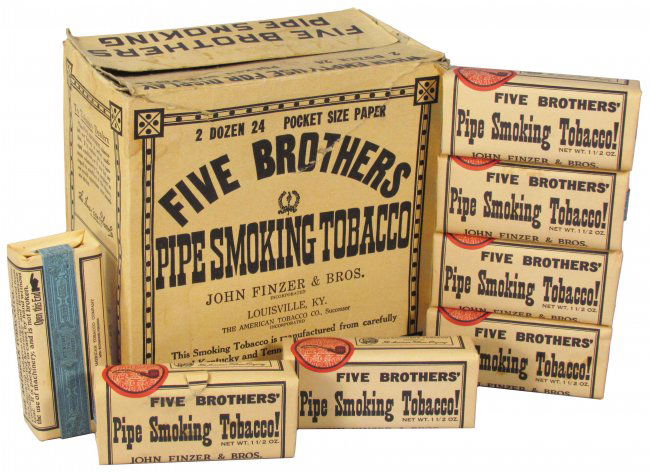
Thank the Good Lord for Joe.  Joe worked for my Dad and Grandpa for many years. What a guy! Joe's vice was chewing tobacco.  Cussing was another.  He could cuss a blue streak, but that's not relevant to the story.  Joe didn't have a favorite brand of tobacco.  He had two favorite brands of tobacco and he would mix them before chewing it.  From his pocket he would pull out a pouch of Five Brothers Pipe Smoking Tobacco:

Image Credit
And then he would pull out a package of Levi Garrett:

Image Credit
He would mix up both of the tobaccos and place a huge wad of it in his cheek.  The funny thing is, we almost never saw him spit.

Well, Joe was sitting on the porch of the camp as I came running up, wailing, and he told me to calm down.  He had just the remedy to cure the sting.  Forget Benadryl!  That's for city folk.  He had something better.  He promptly pulled a big, wet, slimy, soggy, brown wad of chewing tobacco from his cheek that he had been chewing on and he pressed it on my already swollen calf.  I looked on in horror as the warm, brown juice ran down my leg, staining my white tube socks.  I'm not sure how this old remedy works, but supposedly, tobacco has a highly basic composition and it counteracts the acidic nature of a sting. All I know is that it worked.  A good herbal remedy, for sure.

In about five minutes the stinging sensation ended and all the pain disappeared. The swelling went down, the tears dried up and all was right again in the world. Except for the guinea wasps.  But old Joe had a remedy for them, too.  I walked to the shop with him and he pulled out his pocketknife and cut the top off of a Dr. Pepper can.  He then filled it half full of gasoline and we walked back to the scene of the crime underneath the combine shed.  The guinea wasps had settled down by then and were back on the nest. With precision rivaled only by maybe Nolan Ryan, Joe threw a perfect strike, tossing the gasoline so that it saturated the nest, killing all of the wasps.  We looked at the "frozen" wasps lying underneath the ladder to the old combine and Joe gave them a good cussing.  Then we walked back to the camp. Sitting down, Joe pulled out his pouch of Five Brothers and Levi Garrett and began mixing up another batch of chew.  In the event anyone else got stung, of course.

Wednesday, February 3, 2016

Sharing a Sunset With Rosie

On a recent afternoon as the sun was taking its repose in the western sky, I had an opportunity to catch Rosie, one of our Jersey cows, at the water trough and interview her about her life, her goals, her struggles and dreams. She was in a talkative mood on this fine afternoon and in a very transparent manner, she candidly shared things that up to this point had remained private.  Although she wouldn't let me record the conversation, as soon as the interview was over, I sat down and wrote everything down so that I could share it with you.

Me: Good Afternoon, Rosie.  Hey, I gotta tell you, that is a cool trick you do, using your tongue to lick all the way up into each of your nostrils.
Rosie: Good afternoon.  Thanks for the compliment.  I am a girl of various and sundry skills.
Me: Pardon me for disturbing you.  I know that your time by the water trough is 'sacred time.'   I just wanted to have a talk with you so we could all get to know you a little better.


Rosie: That's fine.  I have a few minutes to spare before I go stand around the hay ring.  What do you want to know?

Me: Well, for starters, how old are you?
Rosie:  You see, that is impolite. You aren't supposed to ask a lady her age.  Since I like you, I'll tell you, though.  I was born in February 2009.  That makes me almost seven years old.
Me: So that makes you 38 in human years.
Rosie: Huh?
Me: Veterinarians have a table that you can go to in order to convert your cow years into human years.  Click on this link: Convert your cow's age to human ageThe odd thing is, there is no real formula since the curve is not a linear curve compared to human age.
Rosie: Darn you!  38 doesn't sound as young as 7.  I like 7.

Me: How many calves have you had?
Rosie: Well, I've had Maggie, next I had a still born bull calf, then Amy, and now Clarabelle.  Sadly, you and Tricia sold Maggie to a farmer down the road for a nurse cow for his calves.  Even though she's about 2 miles away, I never have seen her since she left.  My still born bull calf is buried in the garden.  On the bright side, Amy and Clarabelle are still here on Our Maker's Acres Family Farm and Amy has given me a grandson, Chuck.

Me: What are some of your favorite things to do, Rosie?
Rosie: I'm a simple girl.  I just like to eat grass, specifically the tender first grass of Spring.  Hay will do in a pinch.  Sometimes I just like to sit down and chew my cud. And nap.  I like to take naps.  I really like it when Tricia comes and sits by me and rubs my neck.  How come you don't do that?

Me: Ummm... I don't know.  I'll try to do it more often.  Are you ready for spring weather?
Rosie: Well, actually I like any weather, except for summer here in South Louisiana.  Cows' ideal temperature range is between 25 - 65 degrees Fahrenheit.  If you think about it, the cold weather doesn't really affect me much since I have a leather coat on and a fermentation vat in my stomach generating heat.  I'll tell you what I don't like is all this rain!

Me: I understand, Rosie.
Rosie: No, I don't think you do, boss.  You get to take your muddy rubber boots off at the back door. My 'muddy boots' stay on me 24/7!

Me: Does that cause problems?
Rosie: Yes, thanks for asking.  If I'm constantly standing in muddy conditions, I catch the cow equivalent to Athlete's Foot - hoof rot.  It hurts and it is smelly and I appreciate the way Tricia doctors on me with iodine to clear it up.

Me: Tell me more about your ancestry, Rosie.
Rosie: Well, I haven't done a family tree, but I am a registered Jersey.  I've been told that we were brought to the United States in the 1850's from Britain's Isle of Jersey, hence the name.

Me: So who's your Momma?
Rosie: Well, Momma's passed on.  She's buried on the west side of the pasture, beneath the shade of a water oak tree.  Her name was Buttercup, but ya'll always just called her Momma Cow.  Momma came from Pennsylvania, up in the Amish Country.  I've heard the people ya'll bought her from drove up to Pennsylvania and brought her down here.

Me: Do you mind getting milked?  Does it hurt?
Rosie: Look, I'm a "milk" cow.  It's what I do.  I don't mind.  Actually, you are more gentle milking me than my calf was.  She'd bang on my bag with her head to make more milk drop.  Her sharp teeth would sometimes cut my teats and they'd get chapped and raw.  I don't mind ya'll milking me at all. In fact, I am very thankful that I'm a milk cow and not a beef cow.  I give you a contribution. Beef cattle are "fully committed," if you get my drift.

Me: How much do you weigh, Rosie?
Rosie: Well, I declare, son.  That is a rude thing to ask a lady!
Me: I'm sorry, Rosie, for the benefit of the readers, I thought they'd like to see how svelte you are.
Rosie: Well, if you say it like that, Darlin', I currently weigh about 900 pounds. I've lost some of the 'baby fat' I was carrying when I had Clarabelle.

Me: Hey, speaking of Clarabelle, she's not nursing any more since Tricia and I are weaning her and are now milking you twice a day.
Rosie: Yeah, but that's something I need to talk to you about.  The other two calves, Luna & Chuck, have been coming and stealing my milk once they finish nursing off of Daisy and Amy.
Me: I know.  We're having to separate them from you so they won't get OUR milk. We should have that problem rectified.

Me: Anything else you want to tell us?
Rosie: Well, yeah, I gotta brag a little.  Most milk in the US is produced by Holsteins.  I have to give them credit.  They make a lot of volume.  However, we (Jerseys), make the BEST milk.  Our milk has more calcium, more butterfat, more protein AND tastes the smoothest.
Me: Bragger!
Rosie: Oh no, child.  Them's facts.

Me: Any final thoughts?  I gotta get inside for supper.
Rosie: Yeah, have I shown you pictures of my baby, Clarabelle?  She's real pretty. Let me get out my wallet.

Rosie's little girl, Clarabelle

Me: She is pretty.  You must be proud.
Rosie: I am.  Now, if that's all you've got, I gotta go.  I have a lot of hay to eat and cud to chew.
Me: Good night, Rosie.
Rosie: Good night, Kyle.  And uh, Kyle, remember Eat Mor Chikn!


Tuesday, February 2, 2016

Your Nose to the Grindstone

Opening up the back door of your home to the smell of fresh baked bread is one of those simple pleasures of life that will put a big grin on your face.  It is soothing, relaxing, and invokes an involuntary reflex that directs you to immediately rush to where the bread knife and butter are located.  Not margarine.  Butter.  Real Butter.

Image Credit
If you want to do it right, there's some work, though, before you find yourself liberally spreading real butter on top of a fresh, warm piece of bread that you've just sliced from a fresh baked loaf.  And if you really want to do it right, then it involves a little more work, but it's worth it.  Let's check it out.

First, I want to talk about an excellent documentary we watched on PBS the other night.  You can watch it online by clicking Here.  You can also read the entire transcript by clicking HERE.  It is called In Defense of Food, by Michael Pollan.  We enjoyed it immensely.  In the documentary he said that the bread that our ancestors ate was much different from the white bread we eat.  It was whole grain.  The flour was made by grinding wheat between stones. The resulting flour contained the whole grain - the bran, the germ.  There was a downside to this, though - the bread was heavy and chewy.  White bread, made by removing the bran and germ made a lighter bread, but only the rich could afford it.  White bread also had a long shelf life as the germ, which was removed, is the part that goes bad quickly.

Then a new technology called the roller mill came out where you could easily separate the bran and the germ and feed that stuff to the cattle.  Except "that stuff" is the good stuff.  The stuff that makes you healthy.  The bran and germ are loaded with nutrients and vitamins.  The white flour is mainly carbohydrates that the body breaks down into sugars.  We love that, but eating white bread is horrible for you, as most of the nutrients and vitamins were robbed.

Once people began eating mostly white bread, it began to take its toll on people's health.  They began to get sick and suffer from diseases that were heretofore rare. Then it was discovered that these sickly people had a nutrient deficiency caused by removing the 'good stuff' out of the bread!  Well, what do you think the food industry did?  Yep, they began enriching flour with the very nutrients and vitamins that were removed.  Crazy, isn't it?  They began trying to solve the problem that their high tech solution caused by using more high tech solutions.

So, back to the daily grind for our daily bread.  We're low tech rednecks.  We have sought to make white bread extinct in our home.  Here's how we do it:  First, five or so years ago we purchased a Victorio Hand Operated Grain Mill.  We're actually on our second one as we wore the first one out. We like this appliance!  We purchase wheat berries in bulk in 25 pound sacks from Azure Standard Co-op and use two different types of wheat:

  • Spelt: an ancient grain mentioned in the Bible.  It is a soft wheat and easy to grind.
  • Kamut: also an ancient grain.  It is a hard wheat and harder to grind, but has a nice, nutty flavor and more protein.
Tricia normally mixes 1/2 spelt flour with 1/2 kamut flour to make homemade bread.
Grinding the daily bread
We always keep the hopper full of wheat berries and it beckons you to crank and make flour as you stroll through the kitchen.  We've found out (plagiarizing from Tom Sawyer) that if you keep it full, when guests and neighbor kids come to visit, their curiosity is piqued and they'll grind some of the flour for us.  That is shameful conduct on our part, is it not?!

Give it a spin!
Here is an up close look at Spelt grains.  You can see that it has the bran (all nutrients) remaining.

Spelt
For those (like me) that like immediate gratification, you can see the results of your labors coming out of the bottom of the grain mill as you crank.  It builds in big mounds and every so often you have to shake down the cone.

Flour Power!
We have separate storage containers for our spelt flour and our kamut flour since we use each for different baking purposes.  When we fill up the container, we'll dump it into the bulk storage container.

Whole wheat flour
You're probably thinking, "Doesn't that take a long time?"  Not really.  You'd be surprised.  Last night I timed myself.  At a leisurely pace I started cranking and turned off the timer when I had one heaping cup of ground spelt flour.  It only took me 1 minute and 22 seconds to grind a cup of flour! Of course, as fatigue sets in, your second cup will take a little longer, but when you get tired, you enlist help!  It really doesn't take much time at all.  And, with all the calories you burned cranking your wheat into flour, you can well afford to eat a couple more slices of fresh, warm bread when it comes out of the oven and slather butter on top that quickly melts into the bread!!

Flour falling out of the mill
The fresh loaves don't last long around our house.  I wanted to take a nice picture of a freshly baked loaf of bread, but the loaf was already partially devoured.

Our Daily Bread
But that's okay, it'll only be a few minutes until we (or guests that come to visit) have more freshly ground flour from which to bake more loaves of bread.  Victorio actually sells an electric motor attachment that you can attach to the mill if you take the handle off, but for the time being, we're just fine grinding it with man or woman-power.

I can remember as a child reading a Little Golden Book story about "The Little Red Hen."  Do you remember that old folk tale?  It is about a hen that finds some wheat and asked all the barnyard animals to help, but no one will.  She harvests it, threshes it, mills it into flour, and bakes the flour into bread.  No one will help her. BUT, when it is time to eat, well, they all want to eat.  The little red hen declines their offers to help her eat the bread, telling them, "No one would help be prepare it, so one one should help me eat it."  The little red hen and her chicks ate it all.  The moral to the story is that if you want to share in the enjoyment of a product, you should contribute something to making it. Certainly wise words from the little red hen!

Monday, February 1, 2016

A Composting Experiment

A good friend of mine loaned me a contraption called an Urban Compost Tumbler. It is essentially a barrel that rotates on a base.  You can easily turn it around and around in order to stir the contents. We're going to experiment on this third method of composting and see how it goes in comparison to two other methods we use.

We employ a couple of different types of composting methods, namely, a compost pile where we throw everything into a pile and let it rot.  This has a few negative aspects.  First, in order to compost, you must turn the pile in order to aerate the compost.  This helps the bacteria decompose the contents of the pile quicker.  This is also time consuming depending on the size of the pile.  Secondly, throwing waste in a compost pile, especially food waste, attracts varmints like rats.  Although we do compost using this method, the pile now only contains leaves and cow poop, so as not to attract vermin.

I've primarily switched to a composting method called Trench Composting.  It is easy to do.  All you have to do is dig a hole.  You can read about it more here in a post we did a while back: Trench Composting  Trench composting incorporates food waste, paper, coffee grounds, etc. directly into the soil.  The bacteria in the soil and earthworms immediately go to work breaking it down.

So here is the Urban Compost Tumbler.  Since this is a loaner model, the cost for me is FREE!  If you were to purchase this bad boy, the price tag is $379 on Amazon.  Holy Moley!  You have to produce an awful lot of compost in order for this thing to pay for itself.

The Urban Compost Tumbler
So... we'll get started with the experiment.  THIS ARTICLE explains how to compost using the Urban Compost Tumbler.  One of the important things to consider is your ratio of Carbon to Nitrogen.  Some places call in the brown to green ratio, with brown being carbon and green being nitrogen.  We are going to start with a 25:1 Carbon to Nitrogen ratio by weight.  I'm not set up to weigh it, so I'm just going to estimate.  Carbon is much lighter than the nitrogen component, so most of the contents will be hay.

As far as carbon is concerned, we have an awful lot of hay that gets wasted by the cows.  We're going to try to convert some of that waste to compost.  You can see Clarabelle in the photo below and can witness the wasted hay all around the hay ring.  They are sloppy eaters, for sure.  We'll salvage some of that and put it in the Urban Compost Tumbler.  I gathered a heaping tub of wasted hay for our carbon component.

Wasteful bovines aren't efficient eaters.
As far as nitrogen is concerned, we'll use a by product of our laying hens - chicken poop.  We have two chicken tractors that some of the hens roost on out in the pasture.  We push the tractor each day and the poop fertilizes the grass.  We harvest the poop under the roosting bars of the hen house to fertilize the garden and, in this case, to add to the compost tumbler.

Harvesting a chicken by-product
I entered the hen house with a wagon, a tub and a shovel and in no time at all, emerged with a full tub of poop mixed with feathers for our nitrogen component.

A tub of chicken poop
Now that we've gotten our carbon (hay) and our nitrogen (chicken poop), we'll get things started.  It was 70 degrees outside when I got this started.  According to what I read, you need it to be above 50 degrees to start microbe growth.  Once the pile heats up and starts "cooking" it will reach up to 130 degrees.
Recipe ingredients for compost: chicken poop and hay
I unfastened the lid to the compost tumbler.  It is well constructed and heavy and built to last.  It spins easily on its axle.

The interior of the tumbler
I added the ingredients to the tumbler, alternating hay and poop to the 25:1 ratio by weight. Obviously, most of the contents of the tumbler is hay with chicken manure distributed throughout.
.
About 3/4 of the way full to leave space for mixing/tumbling
Then we'll add some moisture as that is very important in composting.  I collected some rainwater and poured that on top of the mix.  It is important to add rainwater and not tap water as tap water has been treated with chlorine to kill bacteria.  You don't want to kill bacteria in composting - you want bacteria to flourish. 

Rainwater
Then, I fastened the lid and began to spin the tumbler.  Each day, I'll give it a spin.


From what I read in THIS REVIEW we can count on finished compost in 14 weeks. We'll see if we can achieve those results.  If we make some nice compost, we'll incorporate it into the garden this spring and then will continue making batch after batch.  Stay tuned for a status report coming in a few months.

Related Posts Plugin for WordPress, Blogger...